
Infrastructure for walking and biking delivers freedom
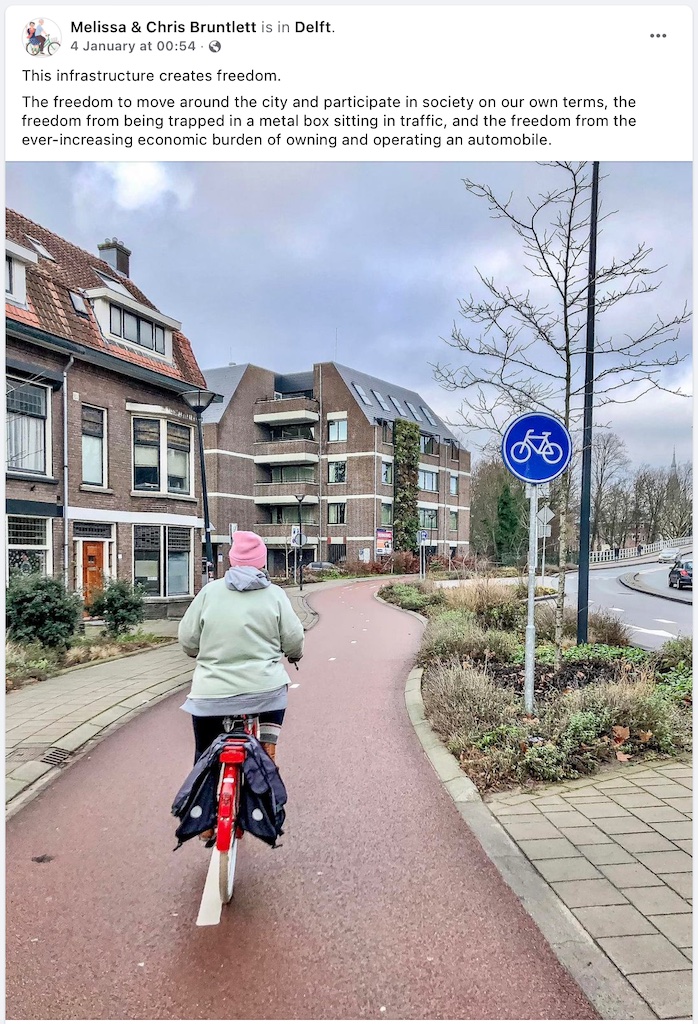
This infrastructure creates freedom.
Melissa & Chris Bruntlett
Many people can’t drive, including:
- people who are too young to drive, e.g. under the age of 17
- people who are too old to drive, e.g. over the age of 85
- people who don’t have a driver’s license, e.g. 15% of adults
- people who are unable to drive, e.g. with vision impairment
- people who are injured, e.g. with a moon-boot
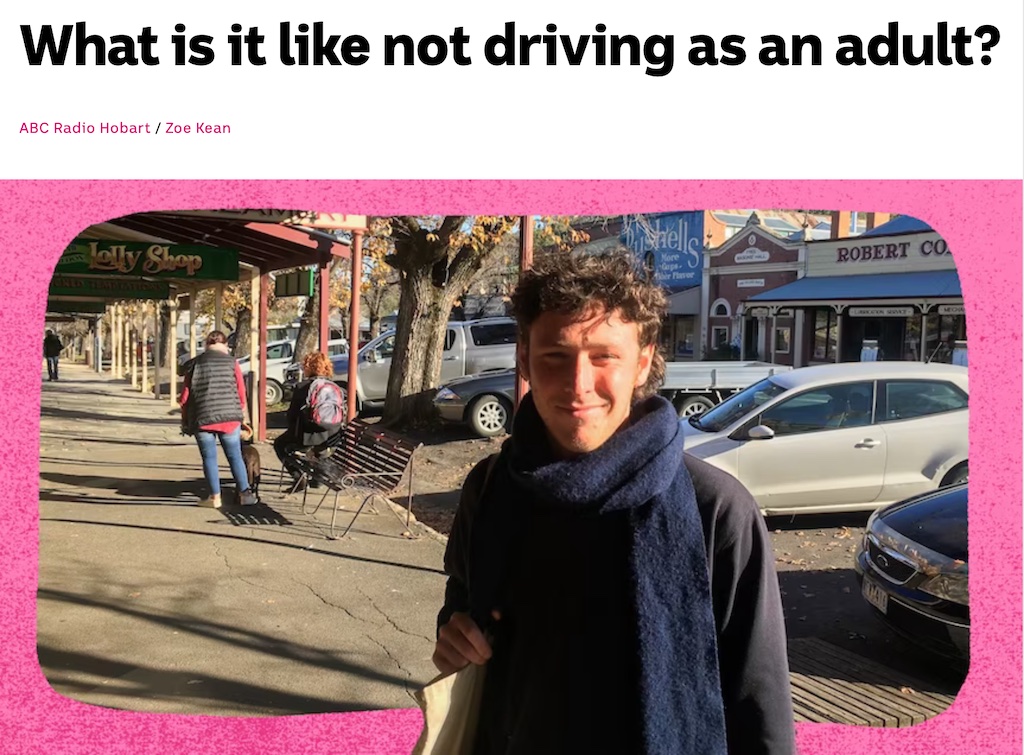
- people who can’t afford to drive, e.g. young people attempting to save for a home
- people who can’t access a car, e.g. a young adult in a family where the car is used each day by others
- people who find driving and parking to be too difficult or stressful

For many of these people, safe infrastructure for biking offers freedom – the ability to get to school, work, friends’ or shops, on their own terms, quickly and easily, and for low cost.
Freedom isn’t just about driving; that view is incoherent:
The key to understanding the incoherence of the auto-centric libertarian is to recognize that they equate the automobile with individual freedom. In that mindset, when the government spends money increasing the amount people drive, they are simultaneously increasing individual freedom, which in their eyes is the primary role of government.
Charles Marohn, Confessions of a Recovering Engineer
How you can help
You can help by appearing on the Streets Alive Yarra website as a champion for your local street, neighbourhood, or school.