
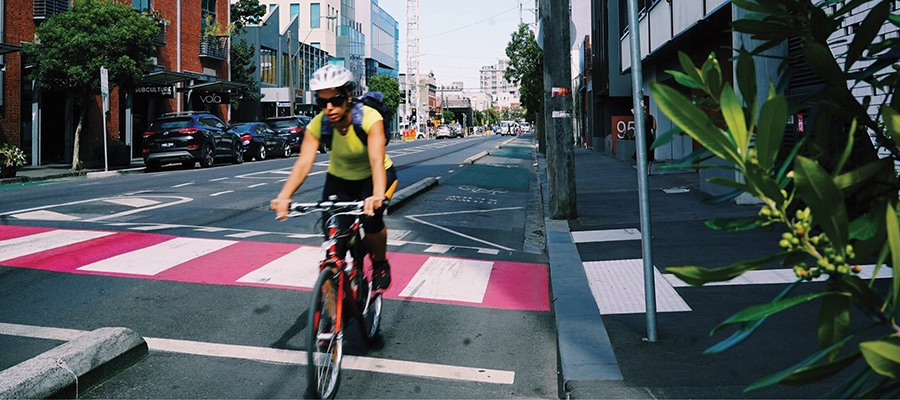
Protected bicycle lanes consist of a separated lane for cyclists on each side of the street. Cyclists are protected from motor vehicles by a kerb. Protected bicycle lanes reduce the risk to cyclists by eliminating the hazards imposed by motor vehicles, such as dooring and collision.
Increased participation
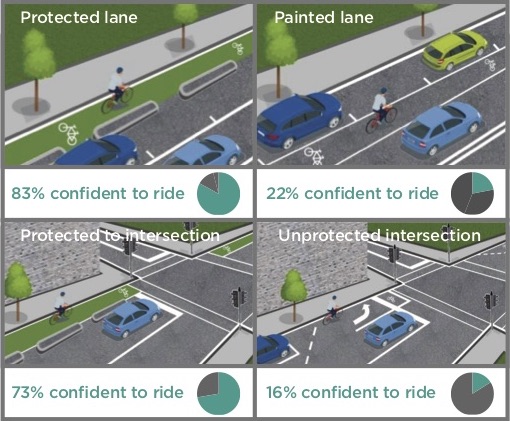
When protected bicycle have been built, people feel safer and participation rates increase, especially amongst children and seniors. Thus, protected bicycle lanes are key to building cities for all ages and abilities.
VicRoads guidance
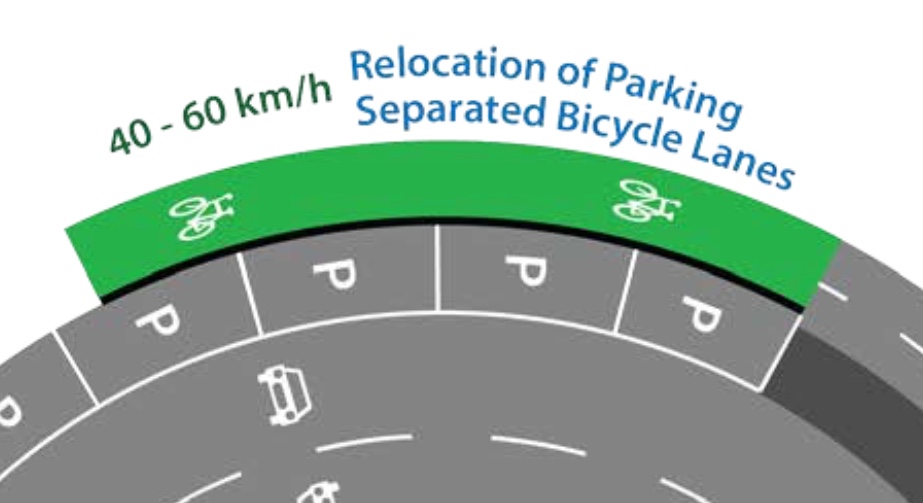
VicRoads Traffic Engineering Manual Volume 3 Part 2.16 recommends the installation of protected bicycle lanes on all streets where the speed limit is 40 km/h or above. This applies to all nominated arterials in Yarra, or any street that has not been slowed to 30 km/h or lower.
Best practice design
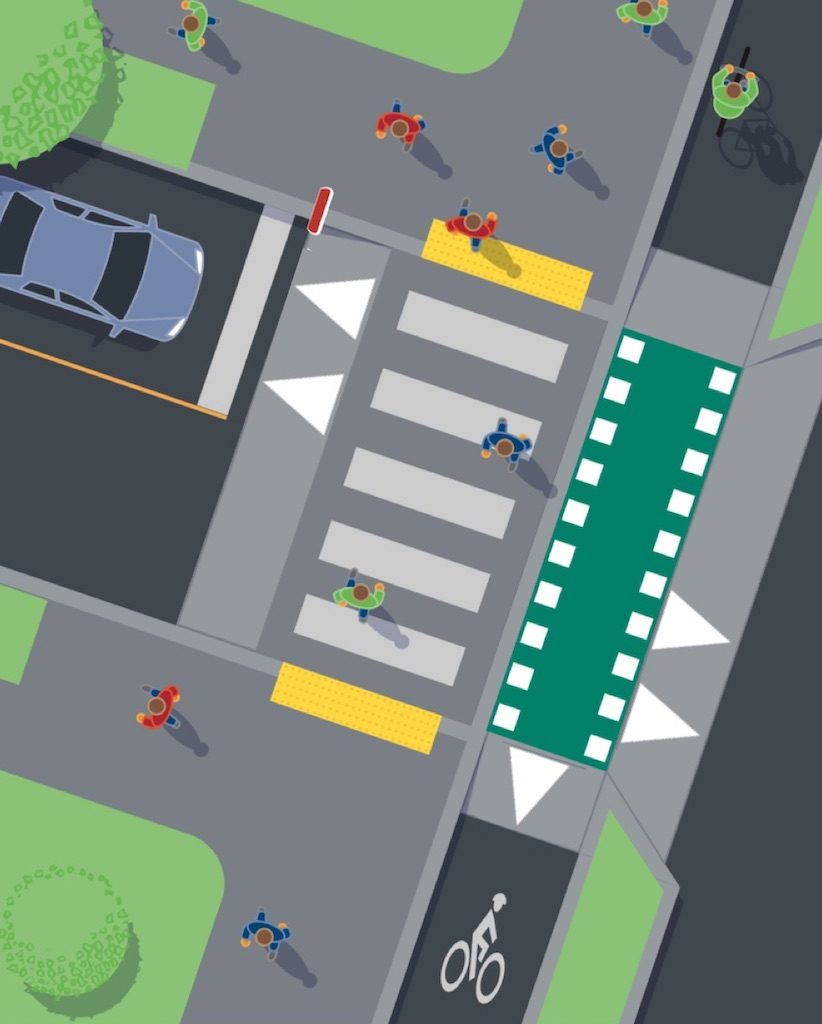
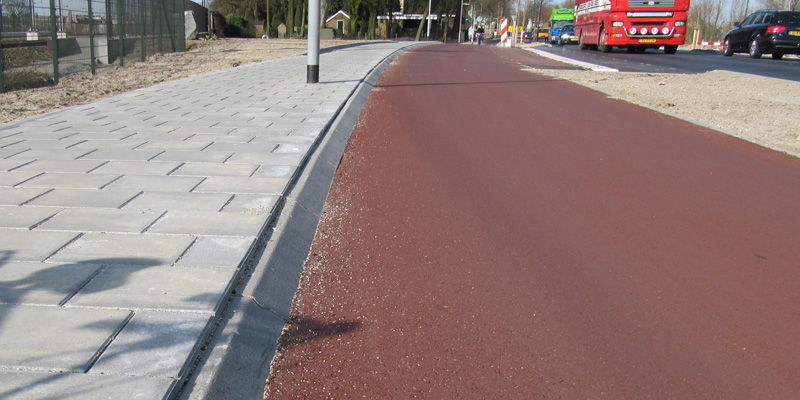
A best practice protected bicycle lane is elevated up above the road, to distinguish it from the traffic lane, as well as being protected by a kerb. The lane continues at the same higher grade when crossing minor side streets, in a similar way to continuous footpaths.
The Netherlands CROW design manual offers best practice guidance that a protected bicycle lane is required when traffic speeds exceed 30 km/h, when traffic volumes exceed 4,000 cars per day, or when cyclist volumes exceed 2,000 bikes per day.

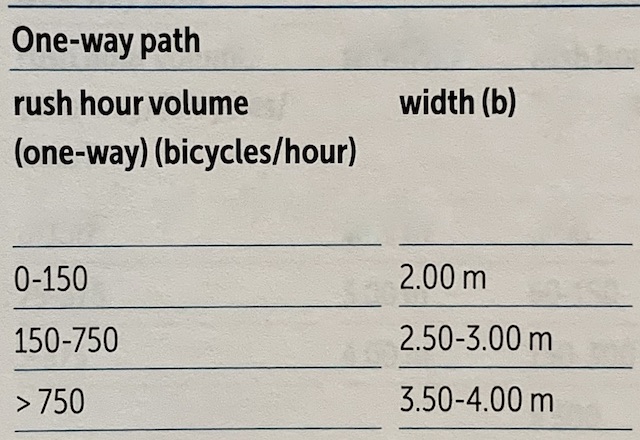
A best practice bicycle lane is 2.0 – 4.0 metres wide, depending upon the rush hour volume, to enable it to be used by people of all ages and abilities, including allowing people cycling faster to overtake slower users. This guidance aligns with local Bike Lane Design Guidelines from the City of Melbourne.
A best practice bicycle lane is paved with high quality coloured asphalt, to provide low rolling resistance and to distinguish it from the black asphalt used for the traffic lane. Kerbs should present a 90 degree (or vertical) barrier to vehicles, to discourage them from entering the bicycle lane, and a 30-45 degree (or forgiving) slope to bicycles, to decrease the likelihood of a crash if they contact the kerb.
Lower cost options
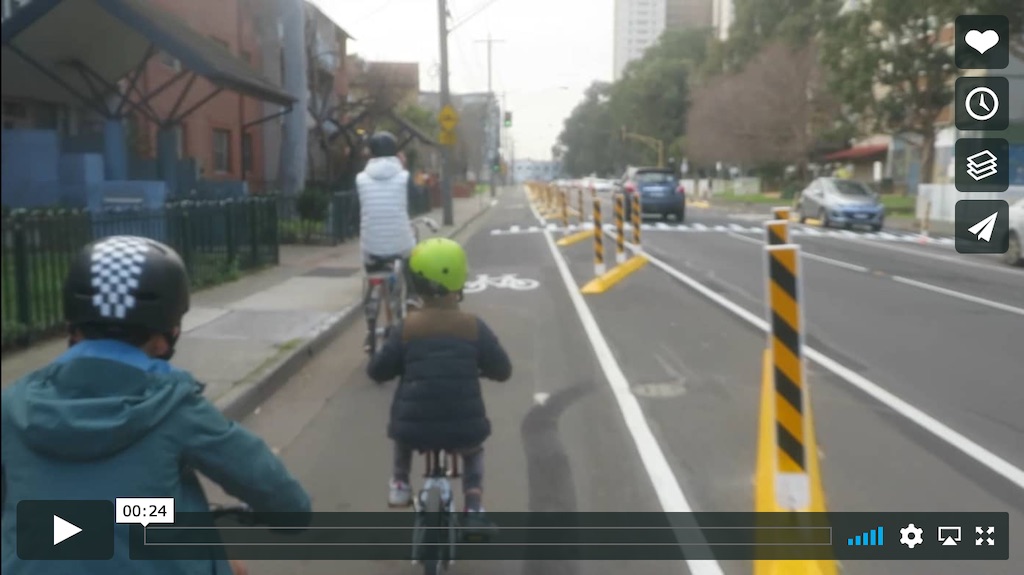
Protected bicycle lanes can be also be built for lower cost using tactical urbanism methods, as demonstrated by the trial infrastructure used on Elizabeth Street:
Supporters
Supporters in Australia include We Ride Australia, who all advocate for networks of safe cycling infrastructure, including protected bicycle lanes:
Design guides
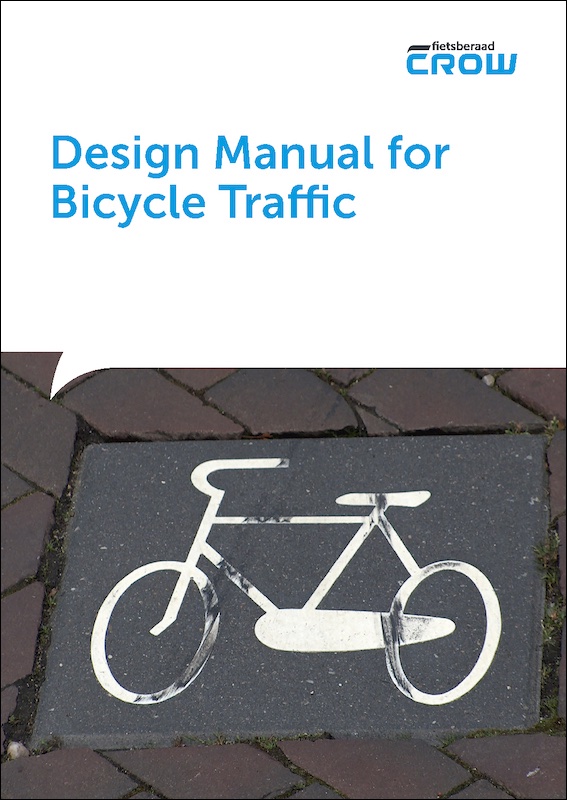
Learn more from this collection of design guides, or the Dutch (CROW) guide to bicycle infrastructure:
How you can help
You can help by appearing on the Streets Alive Yarra website as a champion for your local street, neighbourhood, or school.